






































The International Baccalaureate published “Artificial Assessment (AI) in learning, teaching, and assessment” last Thursday, February 19th. In the post, the nonprofit outlined their approach in managing the usage of artificial intelligence for itself and IB students.
The article stated that “rather than shying away from artificial intelligence (AI), the IB is excited by the opportunities that these tools bring to education to enhance learning experiences and provide additional support to our students.” The IB Academic Integrity Policy has been updated with a new section on “the use of artificial intelligence tools,” where it outlines the uses of AI that are and aren’t acceptable.
“If [the AI] is designed to learn and to increase the student’s knowledge, they consider that ethical,” said English teacher Phil

Hoagland. “If it’s designed to do the work for that student, that’s considered unethical.”
Hoagland, who teaches IB SL English and IB HL English, has seen students use AI for various assignments in his classes.
“It has been used on reading responses, which are supposed to be personal reflections. And it has definitely been used for essays,” said Hoagland.
Even though it has been used for plagiarism and other forms of academic misconduct, Hoagland acknowledged that not all uses of AI are necessarily bad.
“People are using it to gather ideas, get structures, in some cases getting support material. And in it of itself, that’s not problematic any more than it would be to go read someone’s article in a journal,” said Hoagland. “If you’re using it to learn, that’s one thing. If you’re using it to mine information into your own paper instead of using your own thoughts, that’s different.”
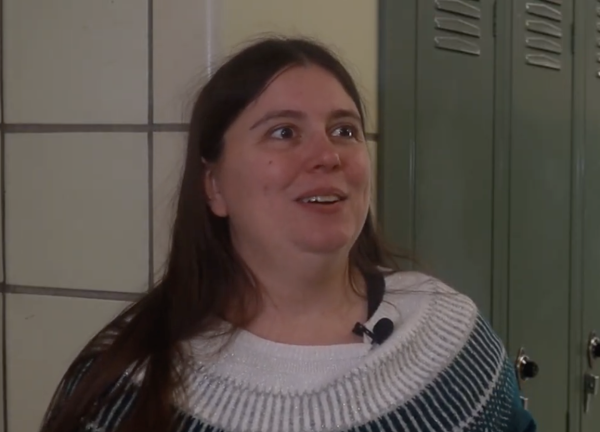
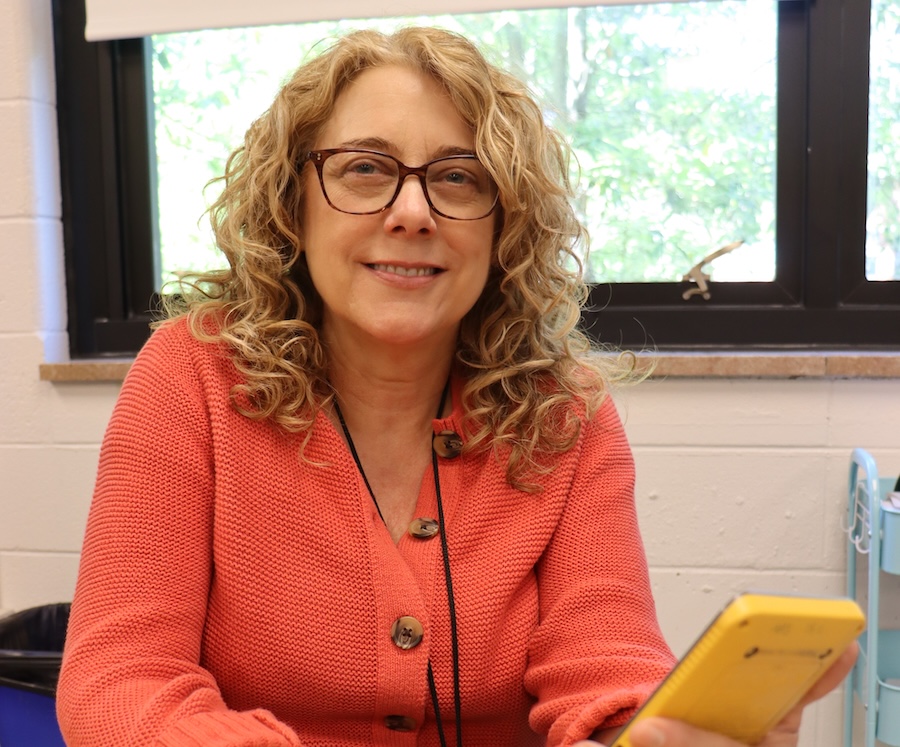
Some teachers have used AI themselves. Emily Nall-Crist, who teaches pre-IB and IB psychology, has found AI useful for optimizing certain assignments in her classes.
“The biggest time I used it was for a recent project that we’re doing in IB psych. We’re currently covering cognitive bias and I wanted students to understand & apply the cognitive biases we’re learning about with current events,” said Nall-Crist. “But I was really scared of coming across one sided. So I had AI help me plan a lesson that was more open-ended, and it kept [the assignment] from being just my opinions. That was really useful.”
According to the article, IB plans to utilize AI themselves as a “quality control tool” to detect errors that exam markers may make. How exactly this new system will function is not clear at this time.
Despite being a recent invention, AI has quickly become a key tool for students and some teachers. And with IB reassuring that “we can navigate the challenges and embrace this [AI] technology’s exciting possibilities,” there’s little doubt that it’s presence in Atherton student’s curriculum and work will continue to evolve.
Check out the original post by IB titled Artificial Assessment (AI) in learning, teaching, and assessment here.