


























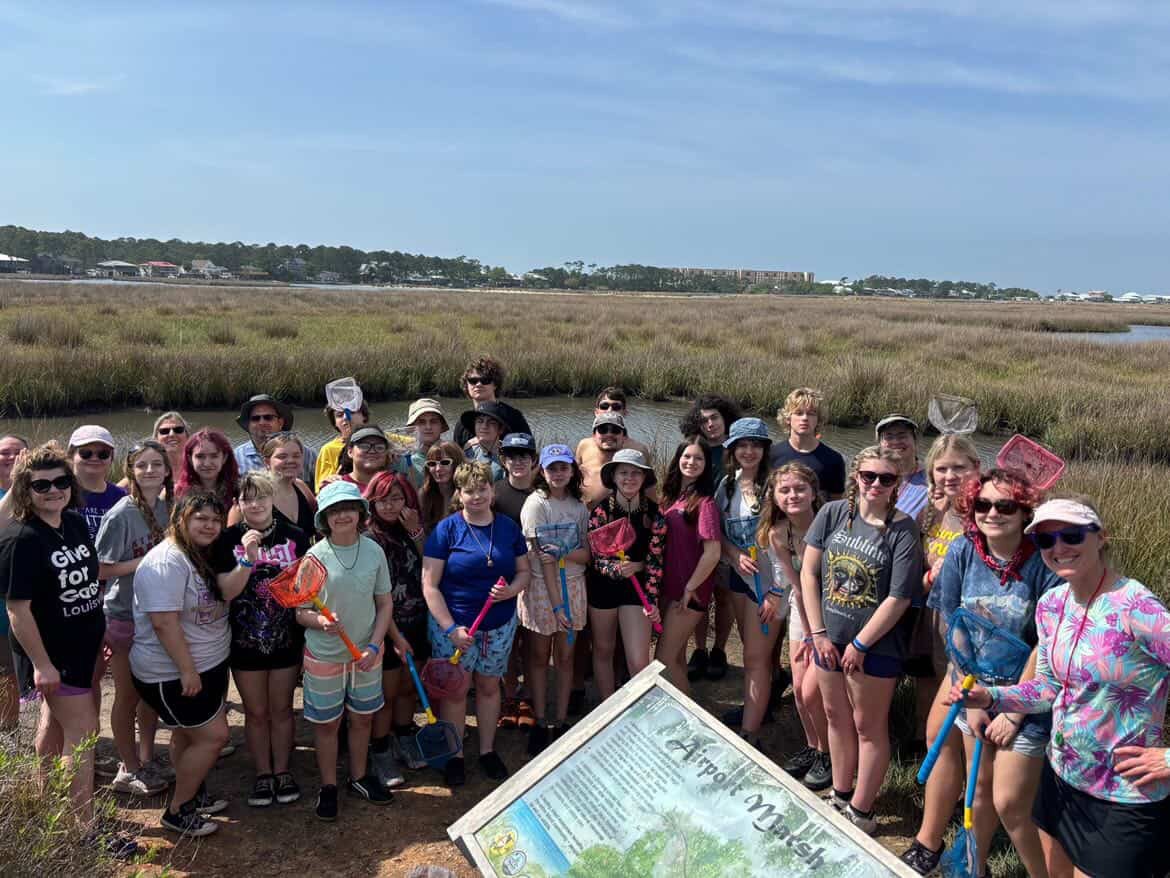
Over spring break, students in the marine biology club traded their classroom for the coastline during a trip to Dauphin Island, Alabama. Students had the opportunity to get involved with the Dauphin Island Sea Lab program through the college and professors that conduct it. The trip offered club members multiple hands-on activities to study marine life and ecosystems as well as deepen their understanding of marine importance.
Trey Leister (12) has always liked marine biology and general wildlife. He explains how this trip emphasized his interests and educated him more than he was before.
“We took classes where we would learn about marine biology and afterwards one day we went to the beach and learned about tides rising,” said Leister. “My favorite day was when we took the research vessel and netted. We put the net in the water, hauled it, and we caught larger fish, skates, rays, and it was really interesting.”
In addition to interactive learning, the trip also highlighted environmental awareness. James DeFazio (11) enjoyed the trip because it showed how various matters are related to marine biology, and how a marine biologist works from day to day.
“We focused on different topics such as how we affect sea marshes, global warming, and methods of how to gather information for research,” said DeFazio. “We mainly learned about salt water marshes because of how important they were for the local island’s health. They protect the island by absorbing wave energy and slowing erosion.”
For many students, the trip was educational and memorable. Students were able to bond and share their passion for marine biology while also doing non-scientific fun activities. Calikay Perez (9) enjoyed countless aspects of the trip due to what the club did in their downtime.
“We would go out to eat and we went kayaking and hiking,” said Perez.
Leister made memories of a lifetime because of all the fun things he did with his friends that one typically cannot do in the classroom.
“Besides the program’s activities that we did, when we weren’t doing anything we’d normally be on the beach, eating ice cream, or playing putt putt,” said Leister.
The marine biology club’s trip to Dauphin Island definitely reminded students that the most valuable lessons are not always taught in school. As the students return to the classroom, they can apply their new knowledge to future projects and discussions.